Danielle Ford, a member of the Nevada State Board of Education and an independent candidate for governor, links her political journey to poker. As she campaigns against incumbent Republican Governor Joe Lombardo and Democratic candidate Aaron Ford, who is not related to her, she is also advocating for poker to be taught in schools without any cash-stakes element.
Ford's campaign has attracted attention not only because of her poker background but also because of the debate over the potential impact of her candidacy on the election outcome. Nevada's gubernatorial election is scheduled for Tuesday, November 3, 2026.
Details
In an interview with PokerNews earlier in October, Danielle Ford said that many people who helped her move on to the next stage of her life were connected to the poker community in one way or another. She began playing poker in 2011 and then spent a year seriously studying the game while teaching herself video marketing through YouTube. According to Ford, she read every book on the subject that she could find.
Ford later attended the World Series of Poker (WSOP), a series of poker tournaments that became a platform for her to make new professional connections. There, she met Daniel Makowski from the poker website PokerAti, who offered her a job as a writer. Ford also met Robert Kroak, the founder of Sillybandz. He hired her to create video content for a new business venture.
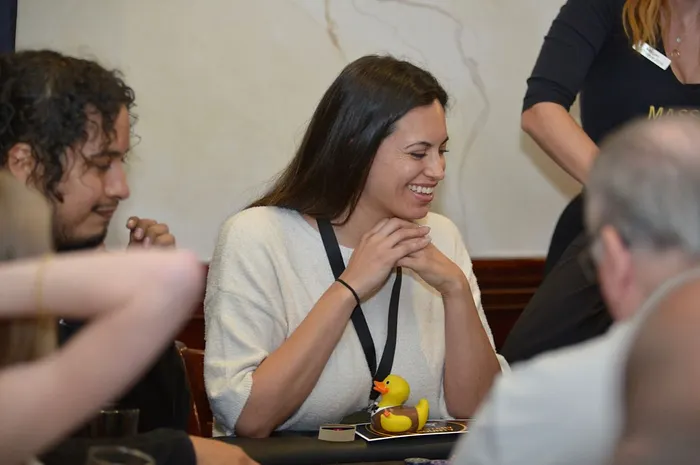
Ford believes these pursuits gave her skills that proved useful in politics. In 2018, she successfully ran for the Clark County School District Board of Trustees, and in 2024 she became a member of the Nevada State Board of Education. When she later decided to run for governor as an independent candidate, she found her future staff members at a Charity Series of Poker (CSOP) event. As part of the series, Ford later reached the final table of a poker tournament in Las Vegas.
The candidate explains the connection between poker and independent politics through a willingness to take calculated risks. In her view, someone who decides to run for a nonpartisan office in an election with substantial funding and strong political connections thinks much like a poker player. Ford herself acknowledges that it is “almost impossible” for an independent candidate to win a gubernatorial race unless they view the situation as a poker game and regard the risk as difficult but achievable.
She describes her strategy with the phrase “chip and a chair.” In poker, the phrase means that even with very little remaining, a player still has a chance to keep fighting. Ford said that you can be at the same table as the strongest players, who have the best chances of winning, but that is not what matters; what matters is having the opportunity to play better.
Most polls of the gubernatorial race do not include Ford at all. She made it onto the ballot after collecting signatures, while available polling shows a competitive race between Republican Joe Lombardo and Democrat Aaron Ford. Against this backdrop, the independent candidate's small campaign has become the focus of a dispute over whether her surname could confuse voters and take votes away from the Democratic candidate with the same last name, potentially helping the incumbent Republican governor.
On October 20, the Nevada Independent reported on a mailer that called Danielle Ford “Nevada's AOC,” a reference to progressive New York Representative Alexandria Ocasio-Cortez. According to the report, the mailer may have been connected to Republican political operatives, and the effort may have been intended to mislead voters. Ocasio-Cortez endorsed Democrat Aaron Ford, not Danielle Ford.
National political journalists David Weigel and Sam Stein also took notice of the campaign. In response to a request from PokerNews, Ford directed the publication to a video posted on Facebook on October 25. In it, she denied any connection to the mailers and accused both parties of spreading false claims about her campaign. Ford said that Democrats call her a spoiler candidate and a MAGA operative, while Republicans are simultaneously trying to portray her as an AOC supporter. She also told PokerNews that she plans to issue a statement about the situation.
Poker also features in Ford's political platform. The Board of Education member and advocate of a holistic approach to learning believes poker should be taught “in every classroom,” but without the gambling component. She emphasizes that the game is not gambling if participants do not wager money, and calls it a skill-based discipline that is more complex than chess because of the many human factors and changing conditions involved. According to Ford, she has taught children mathematics using poker.
At the same time, the candidate believes that Nevadans are still “drawing dead” when it comes to introducing poker into schools. She attributes this to the state's uniform school curriculum and the influence of companies involved in standardized testing.
Ford also commented on a federal change concerning the taxation of gambling. It involves a controversial provision that limits the deduction for gambling losses to 90% of winnings. The candidate said she did not know anyone who considered this fair, since poker players and other gamblers can have entirely losing years. She stressed that not everyone plays poker for a few weekends a year in Las Vegas: for some people, the game is a source of livelihood and a way to support their families.
“Vse-o-Pokere Editorial Team” Comment
We see an issue in this story that is important for the gambling market: public discussion of poker is increasingly extending beyond casinos and tournament venues to encompass education, taxation, and political decisions. For operators, tournament organizers, and professional players, this means the need to assess in advance not only the gaming-related consequences of their activities, but also the regulatory ones. Particular attention should be paid to descriptions of poker as a game of skill, since in the legal context, the format of participation, the presence of monetary stakes, and the status of a specific activity may be of crucial importance. We advise and support clients on matters related to poker, gambling, casinos, gaming, and legislation, including assessing risks for projects and advertising communications. We also help organize work with documents and public statements so that the business’s position does not give regulators additional grounds for claims.